
This post contains affiliate links, which means I will make a commission at no extra cost to you should you click through and make a purchase. As an Amazon Associate I earn from qualifying purchases.
Today we are going to talk about one of my favorites: Bunching onions! Many gardeners like to grow at least some of their veggies in containers; sometimes, lack of space makes this the only option, sometimes it is a love of container gardening itself that drives the decision. Onions are not usually the prime choice for this technique, but the fact is that almost any onion can be successfully grown in this manner.
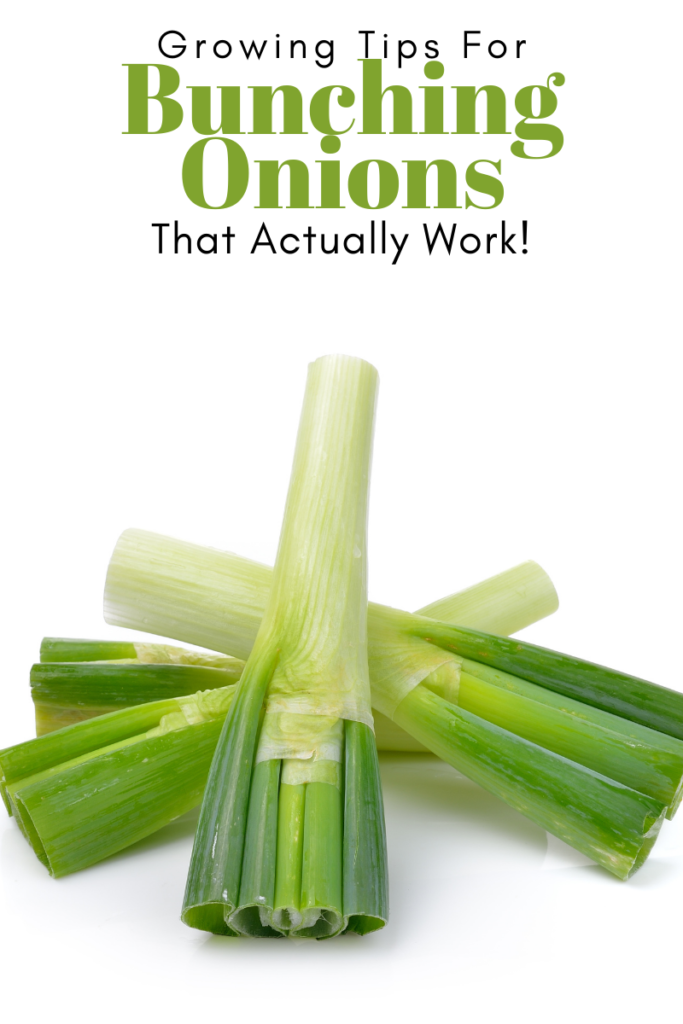
Obviously, the confined space points to bunching onions as the best choice, but full-size onions can be judiciously mixed in with them in all but the smallest of containers. Here are a few ideas to help you on your way.
Gardening Tips for Bunching Onions
Probably my all-time favorite item to eat - right out of the garden! This fairly sweet treat is also a favorite on the relish trays of Wisconsin Supper Clubs - as a small sprinkle of salt makes them beyond yummy!
Select Your Onion
As mentioned, bunching onions are the preferred choice. Some excellent choices are White Pearl, Feast, Beltsville Bunching, and Evergreen Bunching. There are many others. Bunching onions are best grown from seeds, so check your seed catalogs; most of the major suppliers offer at least one variety.
Gather Your Containers
Onions need about twelve inches of soil under them to develop properly. You can use large commercial pots, 5-gallon pails, old washtubs, halved wine or whiskey barrels, or any other deep container that you may fancy.
All containers should have holes bored in the bottom to allow for drainage, and before adding soil, it is a good idea to put an inch or two of gravel to the bottom of each pot. This keeps your drainage holes from clogging.
A nice gardening-related project for wintertime can be painting that washtub or those five-gallon pails with festive gardening scenes.
Bunching Onions Basic Facts
Seed germinates in 8 to 10 days. The best temperature for germination is from 60 to 75 degrees Fahrenheit, but black-eyed peas will germinate from 40 to 80 F. As with bush beans, germination in ideal temperatures will take eight to 10 days, but it can take two weeks or more if soil temperatures are below 60 F.
Plant Black Eyes Peas in the spring, as they can only be grown in warm soil, with no risk of frost or cold, generally in the late spring and throughout the summer.
86 degrees Fahrenheit. This is a heat-loving vegetable that won't really take off until the air temperatures remain reliably warm.
You will want to grow 20-30 plants per person planning on eating them. You have to shell these buggers, like peas and it takes more plants than you would think.
First of all, it is traditional to kick off the new year with them - tons of recipes suggest it as a way to bring not only good luck, but prosperity.
These are best cooked, and are often served with greens, rice, and / or pork.
Mix Your Soil for Bunching Onions
Take equal parts of rich, loose loam and compost and run each through a half-inch sifting screen, adding a double handful (for a whiskey barrel) of general-purpose fertilizer. Mix this well with a shovel and fill your containers all the way to the top. The soil is going to compact over time, so you will not want to underfill.
Plant The Seeds
One quarter to one-half inch deep is optimal; the seeds should germinate in 4 to 10 days, in temperatures of 55 degrees or more.
Maintenance
Weeding, mulching, and open garden chores are mostly negated when growing in containers, but a consistent water supply is necessary; strive for an inch to an inch and a half per week. Spraying with seaweed extract over the course of the growing season is always beneficial.
Harvest Your Onions
There is no particular time frame for this; the onions are ready for you to eat when they look like you would like to eat them. Remember, always leave a few plants; bunching onions will come back on their own year after year.
Footnote about Bunching Onions
You can mix a large main crop onion or two into your larger containers, just for the fun of it; they will not inhibit the growth of your bunching onions unless you plant them too thickly. You will wish to use plant transplants or sets to start these onions, not seeds. Maincrop onions require longer time periods to mature, usually 80 to 120 days.
Now go check those seed catalogs!
Benefits
Onions do a lo of things beside fill you with great fiber. These gems have been known how to help fight cancer cells, especially in the stomach.
They also work as antioxidants - Antioxidants in onions like flavonoids and polyphenols hunt down free radicals, substances that can lead to cancer, inflammation, and age-related diseases. The antioxidants lose their power during cooking, so fresh and raw are the best way to enjoy them.
Easy Recipe
While I enjoy these best on top of my salads or diced and pan fried to be added to my morning omelettes, there are a ton of different ways to use these. Basically, anything you would use an onion for is a great use for bunching onions.
I DID find this great video from a CSA farm that gives some fun ideas and storing tips - enjoy!